Since 1925 · Made in Frankfort, IL
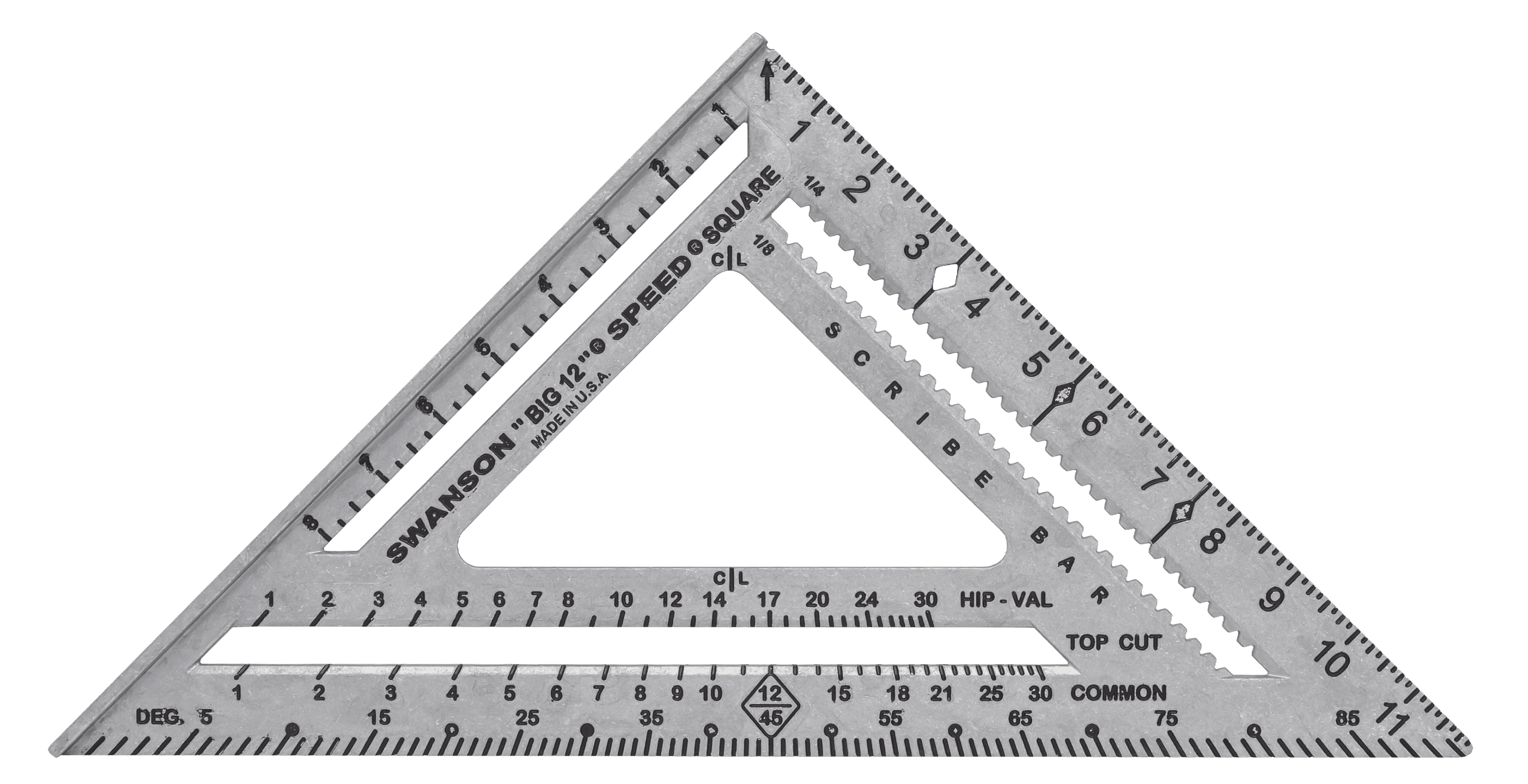
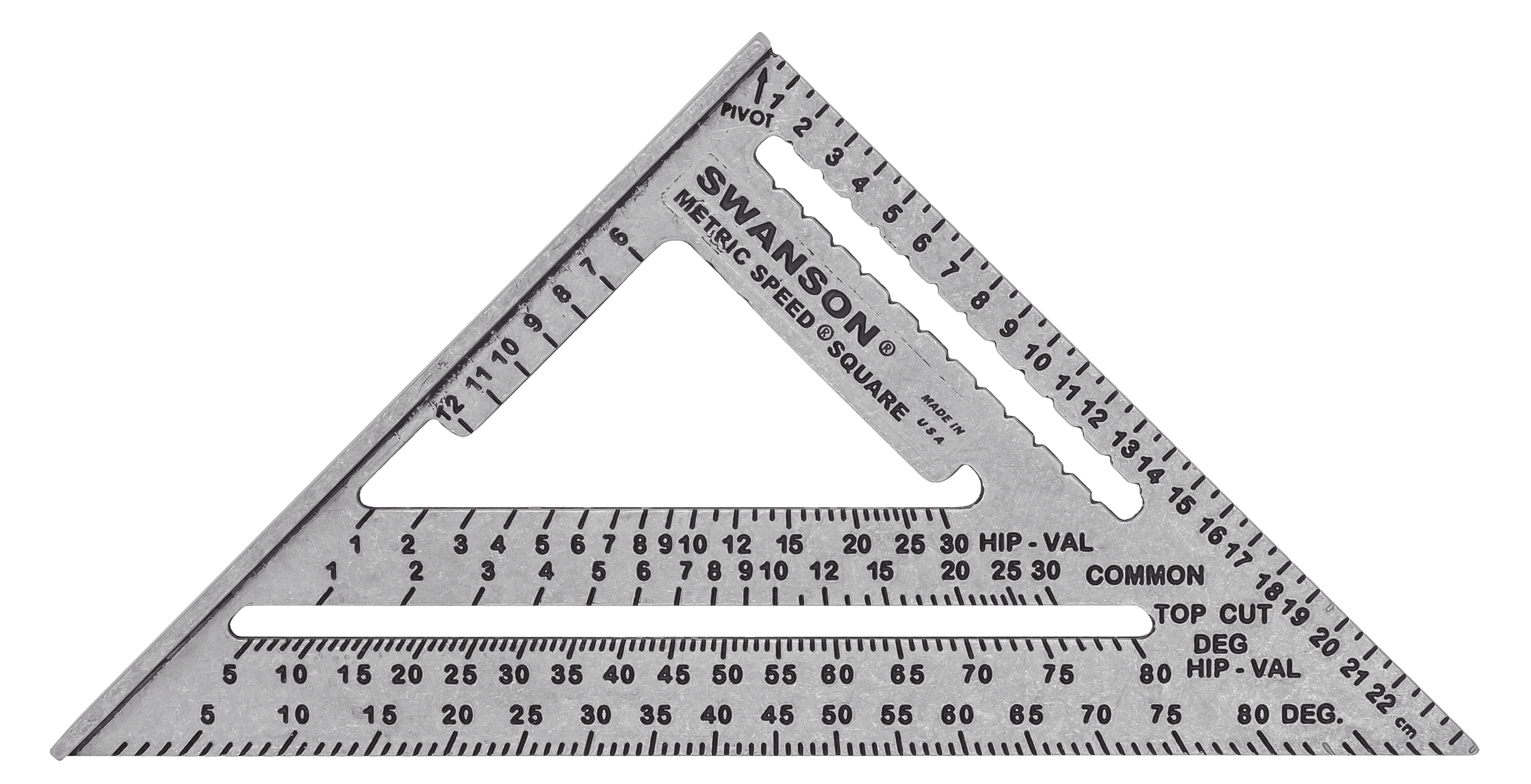
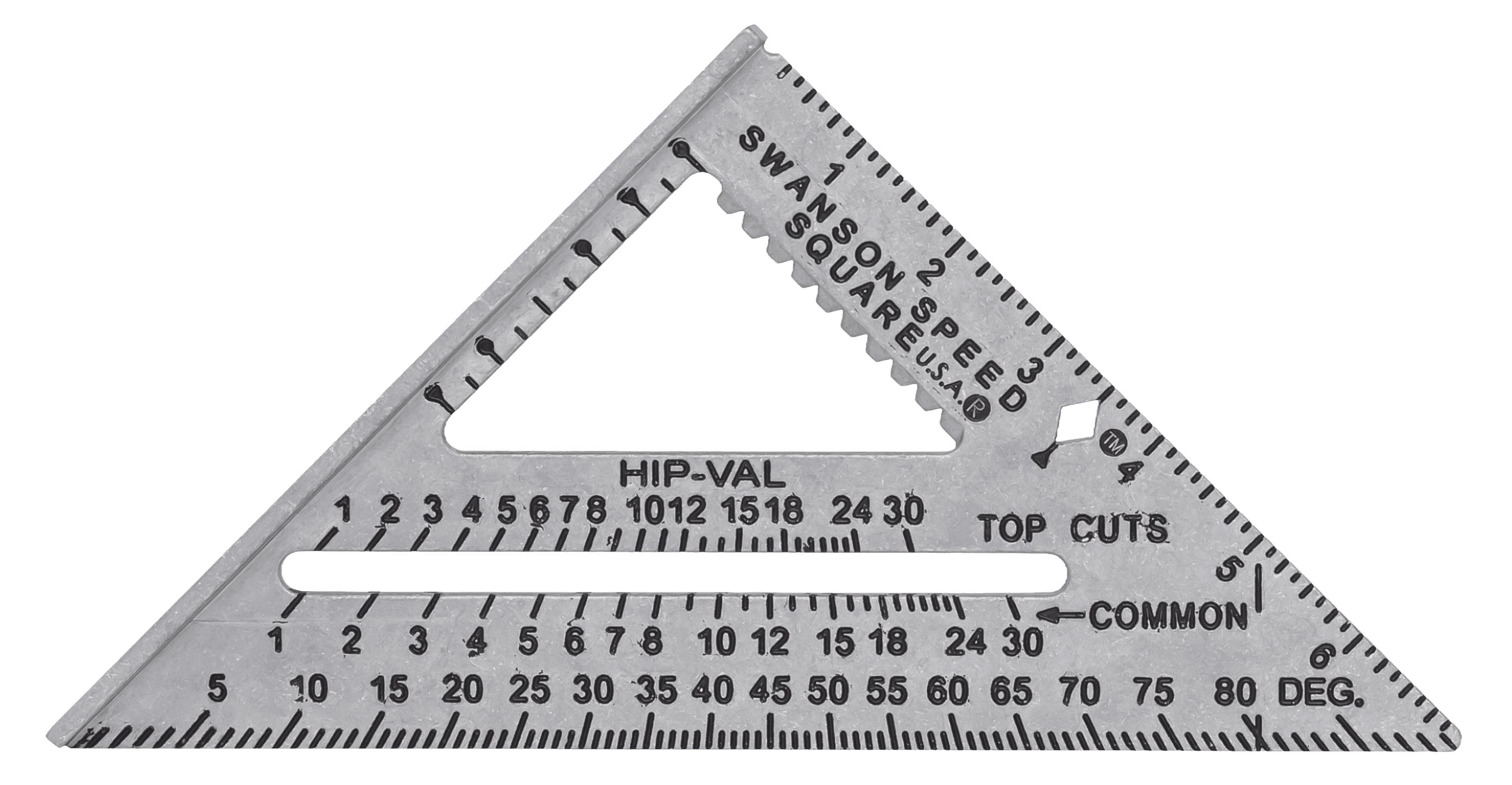
The Speed® Square is known for its extreme durability and visibility, thanks to a heavy-gauge aluminum alloy that is 15 times stronger than standard aluminum construction, plus a matte finish that won't blind you in the sunlight. It is the original five-tools-in-one layout square: try square, miter square, saw guide, line scriber, and protractor in one heavy-gauge aluminum die-casting. Swanson invented the One-Number™ Method to mark common, hip, and valley rafters off a single pitch number. You know you're using a Speed® Square when you see the Diamond™ cutout. Invented by Albert J. Swanson in 1925, the name is a registered Swanson trademark. No other company can market a square as a Speed® Square.
Albert J. Swanson was a Chicago-area carpenter frustrated with the number of tools it took to lay out a roof. In 1925, in his shop in Frankfort, Illinois, he designed a single triangular tool that carried the try square, the miter square, the protractor, and the rafter scale on one piece of metal, with a raised lip along the pivot edge so it could be registered against a board in one motion.
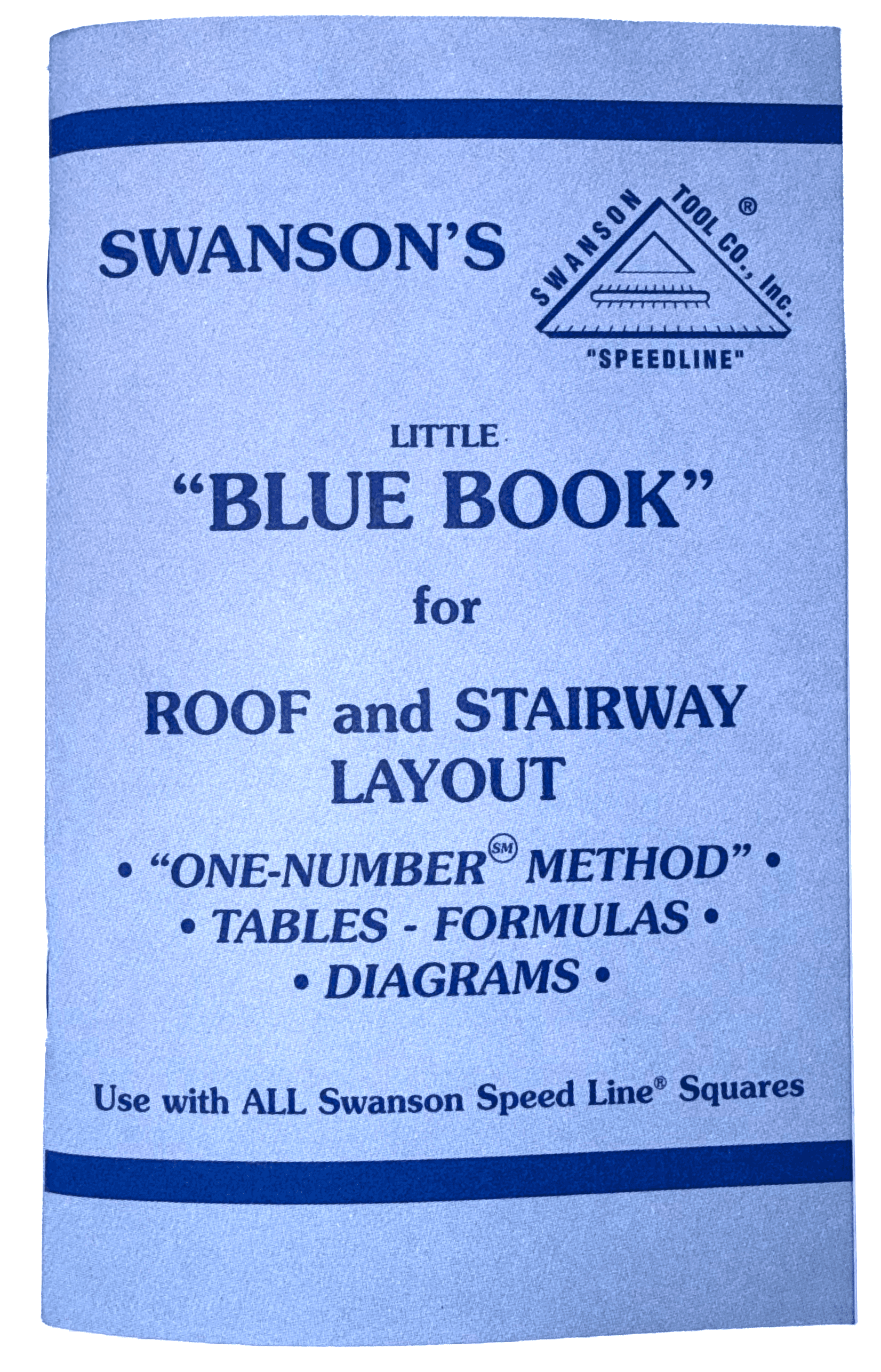
He filed for the trademark on the name Speed® Square, published a pocket layout guide called the Blue Book so any carpenter could work the rafter scale, and started producing the tool from Frankfort. Every Speed® Square manufactured since carries the same layout system Albert set in 1925. Same tool, different century of materials.
Every Speed® Square in the Swanson line carries these five features. Read across, and you have the whole tool.
Aluminum · Deep Black-Filled · Made in the USA
Two features separate a Swanson Speed® Square from the tools sold beside it on the pegboard.
Durability
Every Speed® Square is built from heavy-gauge billet aluminum. The 12 in. Big 12® is 15 times stronger than standard aluminum. That tolerance holds after the tool bounces off a slab, rides against a circular saw shoe for a shift, or gets carried in a nail belt for years.
Composite and plastic layout squares flex against a saw shoe, chip on a drop, and lose their 90 degree corner tolerance the first time they get sat on. The aluminum body was Albert Swanson's answer in 1925 and it is still the reference standard today.
Visibility
Every degree mark, rafter number, and gradation on a Speed® Square is cast into the aluminum body and deep black-filled for high-contrast reading in direct sunlight. The numbers are part of the tool, not applied on top of it.
Painted, printed, laser-etched, and decal markings wear off from sun, sweat, and the same saw shoe that abuses the body. A deep black-filled Speed® Square reads the same on year one and year ten.
The Speed® Square is the layout tool for framing, roofing, and finish carpentry. Four things it does daily on a jobsite:
For roof and rafter work specifically, the common rafter scale and the hip-val scale let you calculate the plumb, seat, and heel cuts on a rafter from a single pitch number. Blue Book walkthroughs live at cutting a common rafter and cutting a hip or valley rafter.
The layout convention Albert Swanson set in 1925 is called the one-number method. Instead of running a separate calc for every cut on a rafter, the carpenter uses the pitch as a single reference number. The number is set on the pivot edge, the tool pivots around the notch, and the plumb, seat, and heel cuts fall off the same setup.
For a full walkthrough of pitch-to-cut, see the roof pitch reference and the Big 12® method. The one-number layout is the reason a Speed® Square is faster than the tools it replaced. Every mark comes off the same reference number, so the carpenter isn't juggling four separate calcs on the same board.
Every Speed® Square in the Swanson line is CNC'd, packaged, and shipped from Frankfort, Illinois. Four models cover the spread of trades.
7 in., Daily driver
Speed® Square
Fits in a nail-belt pocket. The flagship the tool is known for.
Composite
Speedlite® Series
High-impact composite frame. The same layout system in a lighter tool.
The answers below carry FAQPage structured data so voice assistants and answer engines can lift them verbatim.
Albert J. Swanson invented the Speed® Square in 1925 at Swanson Tool Co. in Frankfort, Illinois. It was the first single-piece layout tool to combine a try square, miter square, protractor, saw guide, and line scriber. Every Speed® Square you can buy today is manufactured by Swanson Tool Co.; the name is a registered Swanson trademark.
A Speed® Square is used to mark 90 degree and 45 degree cuts, lay out roof rafters and stair stringers, transfer angles, act as a saw guide for a circular saw, and scribe reference lines on lumber. The pivot notch at the corner lets you lay out any angle from zero to 90 degrees off a single reference edge.
It is called a Speed® Square because it lets a carpenter make layout marks in one motion instead of the three or four required by the try squares, miter squares, and protractors it replaced. Albert Swanson named it for the speed of that motion in 1925.
A rafter square is the general category of triangular layout squares used to lay out roof rafters; the Speed® Square is the Swanson Tool Co. brand and the original tool that started the category. All Speed® Squares are rafter squares. Only the Swanson Tool Co. line can be marketed as a Speed® Square; the name is a registered trademark.
The 7 in. Speed® Square (Swanson model S0101) is the daily-driver flagship and fits in a nail-belt pocket. The 12 in. Big 12® Speed® Square (S0100A) reads farther across a rafter run and is the choice for open framing and hip-val work. The 4.5 in. Trim Speed® Square (S0145B) is sized for finish carpentry and cabinet work.
Yes. Every Speed® Square is CNC'd, packaged, and shipped from the Swanson Tool Co. factory in Frankfort, Illinois. Swanson has manufactured layout tools in Frankfort since 1925.
The three visible scales on a Speed® Square are the degree scale (zero to 90 degrees along the hypotenuse), the common rafter scale (rafter length per foot of run for common pitches), and the hip-val scale (matching lengths for hip and valley rafters). The one-number layout method uses the pitch number by itself; align the number on the pivot edge and mark along the blade.