
Chapter 1 /6 · The Original Blue Book
Reading the Speed® Square
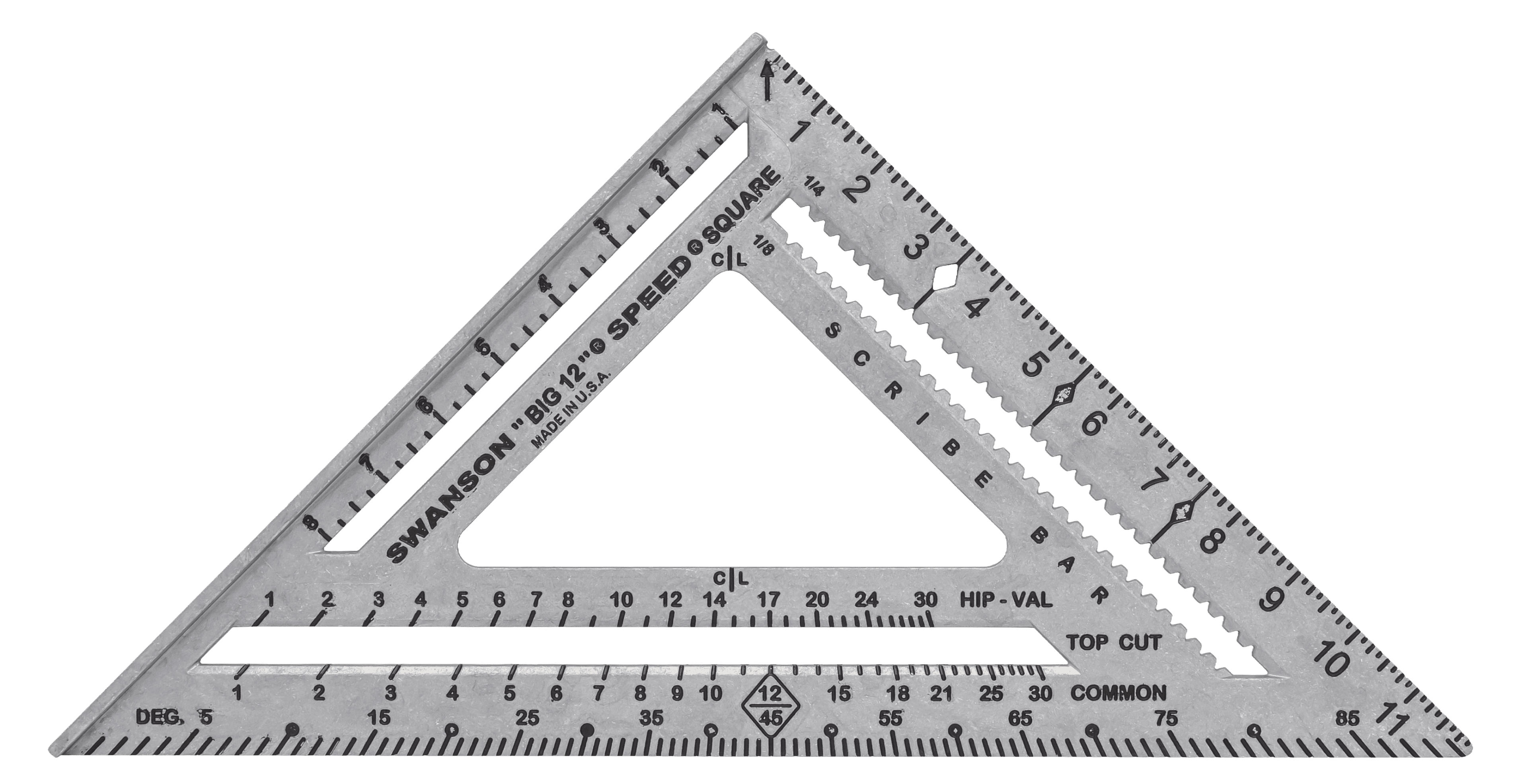
The triangular tool that started it all. Five scales etched on three edges, designed by Albert Swanson in 1925 so a framer could carry every layout reference in a tool belt.
After reading
Identify every scale on the Speed® Square, know which scale to use for which cut, and understand why one number on the COMMON scale anchors every cut on a roof at that pitch.
The square in your hand
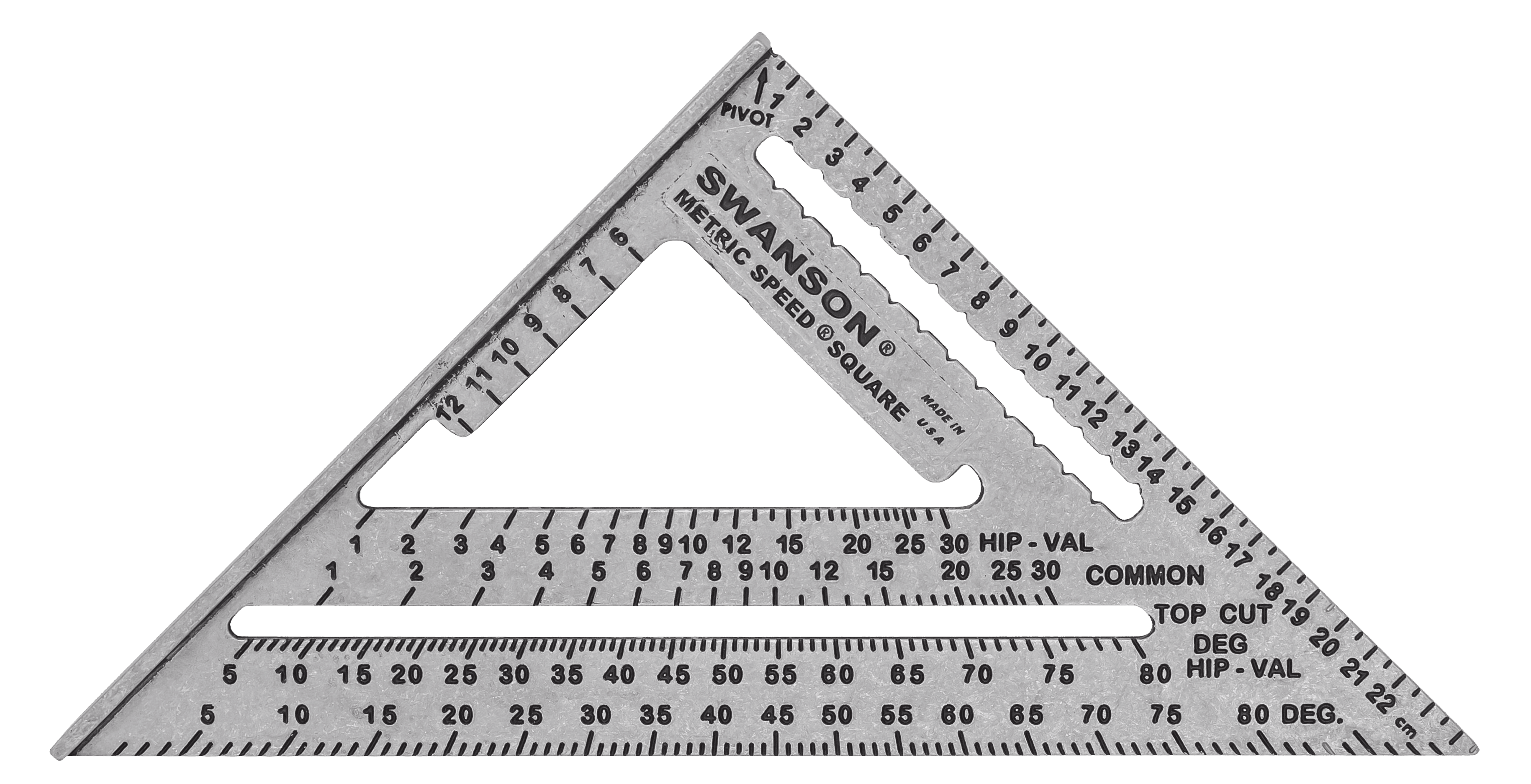
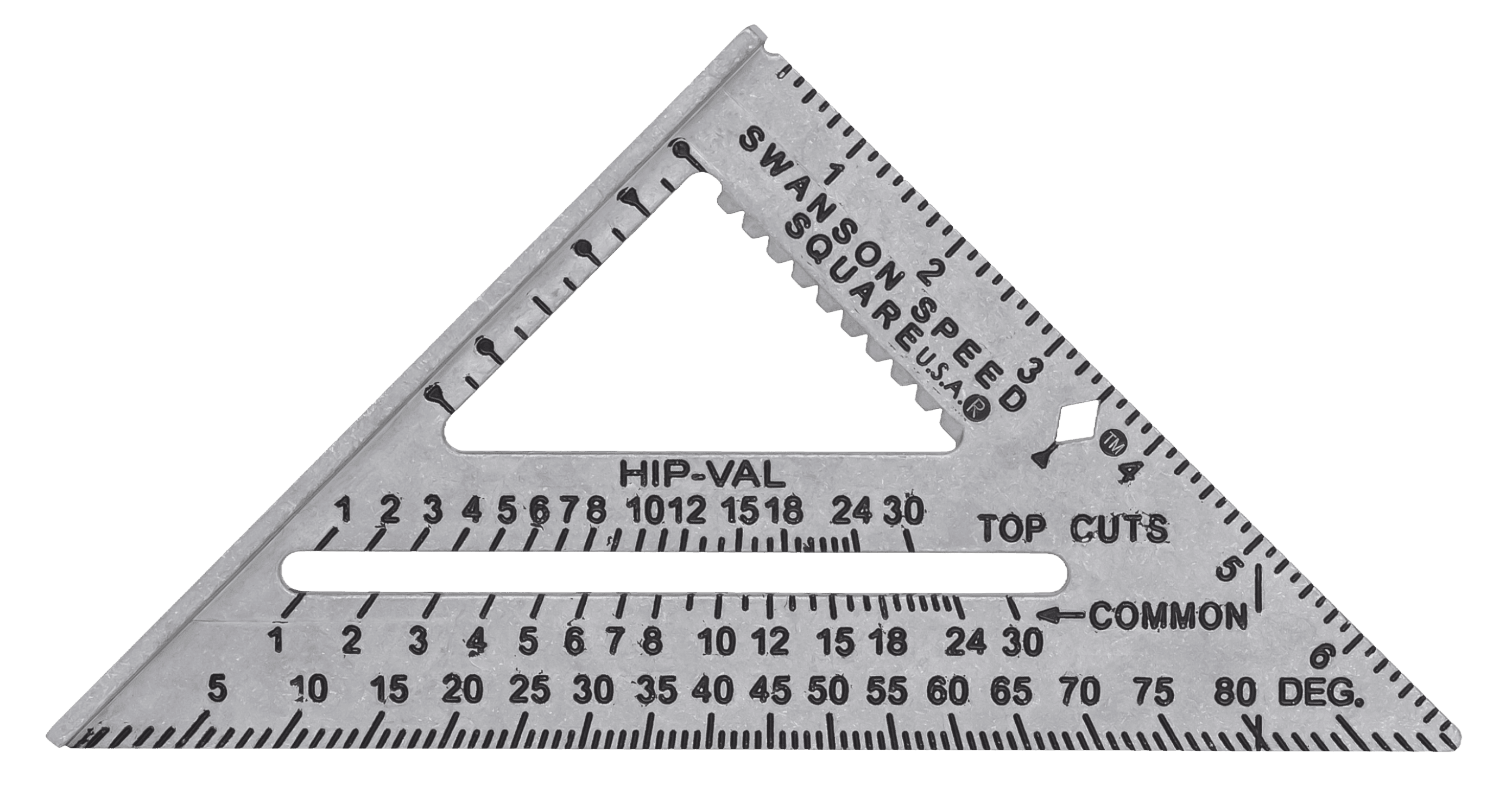
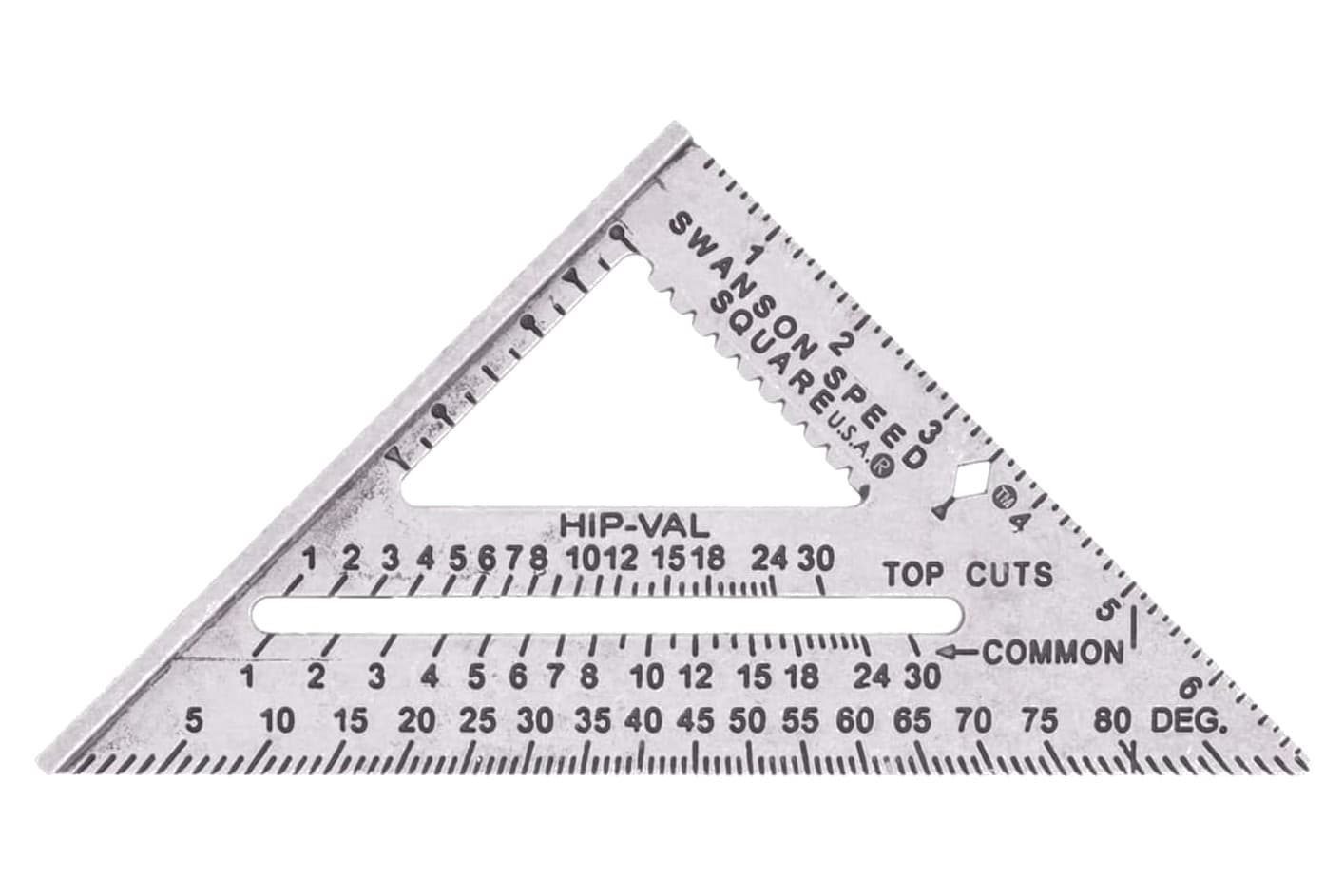
The Speed® Square is a right triangle with five reference scales. The COMMON scale and the HIP / VAL scale share the long edge. The 0-90 degree scale runs the bottom edge. The inch scale and the pivot point sit at the right-angle corner. Every cut on a roof, a stair, or a piece of trim starts with one of those scales and the pivot.
How a framer uses it today
The current Little Blue Book opens with the ONE NUMBER® METHOD: pivot the square at the rafter's top edge, find the rise number on the COMMON scale, mark along the long edge. That single number cuts every plumb cut, every seat cut, every cheek cut for that pitch.
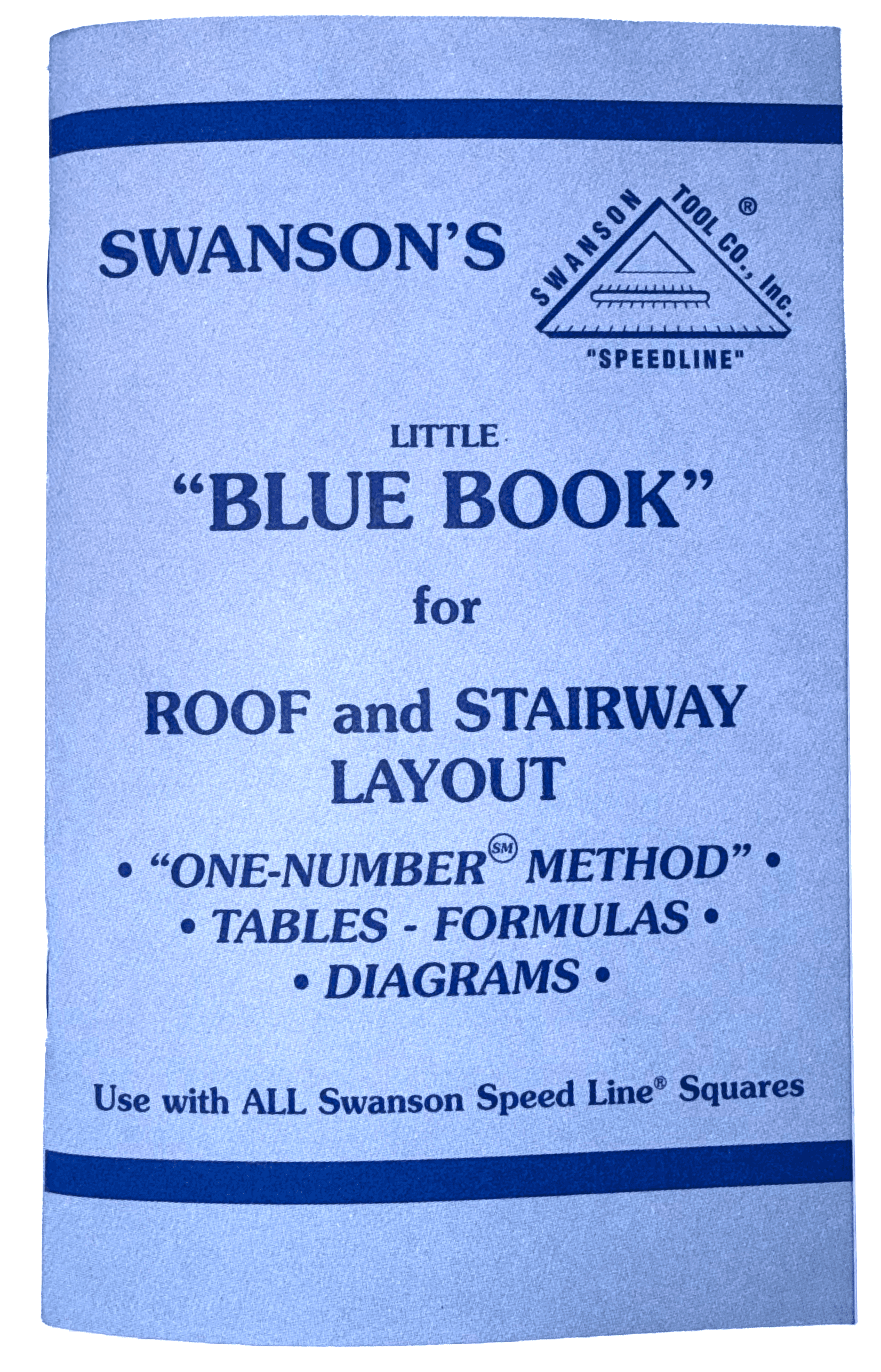
"ONE-NUMBER℠ METHOD:" Helping Workmen Make Correct Angle Cuts.
Common rafter, geometry
Figure 01The math, live
Hover any term · the geometry highlights
The rafter length per foot of run. Multiply by your span in feet to get the cut length.
Pitch
5 / 12
THE SCALE, 0-90 DEGREES, ACROSS BOTTOM (LONG LEG) OF SQUARE ALLOWS USER TO MARK AND MEASURE HIS WORK IN DEGREES. EACH HEAVY BLOCK LINE IS 1° WIDE. EACH SPACE IS 2° WIDE. THIS MAKES IT MUCH EASIER FOR THE EYE TO PICK OUT A LOCATION ON THE SCALE.
FRAMING A ROOF using a Swanson Speed® square, "Big 12®"® square or Speedlite®® square, although they differ in size (7",8",12") as well as some of their other features, requires the use of only one number, the inch rise per 12 inches of horizontal rafter run. The "ONE-NUMBER℠ METHOD" was developed by SWANSON TOOL CO., INC. To simplify roof framing.
The diagram shows square set for 5" rise of common rafter. For 5" rise of the hip or valley, pivot square to #5 on HIP-VAL scale. Always line up the rise number from the same edge of material as you pivot square. The mark along top edge of square will be the PLUMB LINE. Keep pivot point tight against material. You can also read the roof angle on degree scale - 5" rise is a 22.5° angle.
What the Pro Speed® Square added
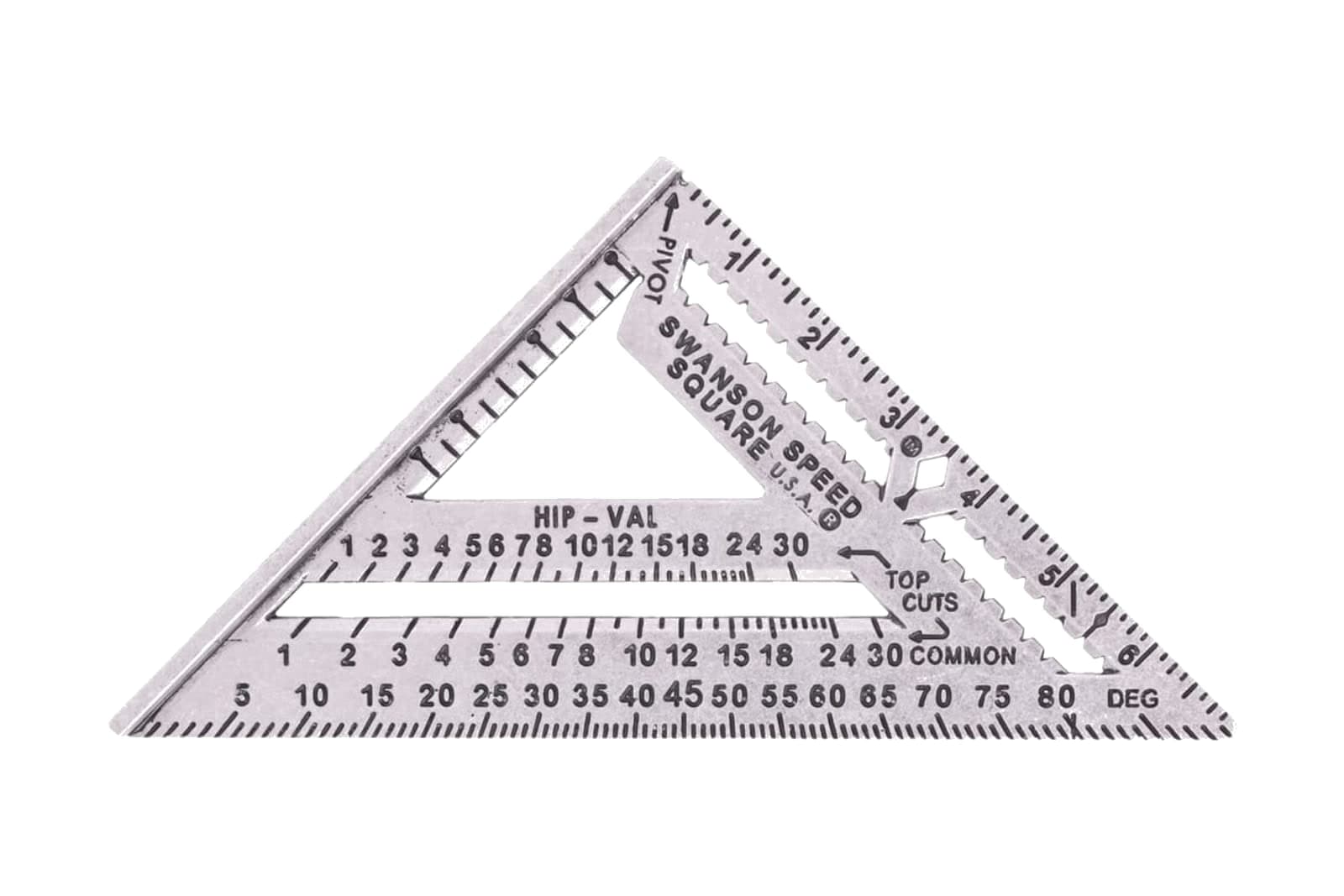
Albert's original 1925 design has been refined for the modern jobsite without changing the math. The Pro Speed® Square adds a longer scribe bar with 1/8 inch increments, a 1-1/2 inch edge for 2x material, beveled edges for tighter top cuts, larger numbers, and deeper markings.
SWANSON SPEED® SQUARE PRO NEW FEATURES
THE "ONE-NUMBER® METHOD" HELPING WORKMEN MAKE CORRECT ANGLE CUTS FOR ANY PITCHED ROOF
The "ONE-NUMBER® METHOD" developed by the Swanson Tool Co. Simplifies roof framing to where roofs are really framed as "easily" as your studdings or joists.
Here is a brief description of the various rafters, how to get the different cuts, where to measure from, what is meant by "run" and "rise," information about the hip and valley rafter, etc
This book has been rewritten with the use of more pictures in the hope it will be of greater benefit to those who are not as familiar with roof construction as the tradesman. Good planning will save time and material.
The Speed® Square
The Speed® Square shown is our current model. The hip-val cuts, the common-rafter scale, and the one-number method trace directly to Albert Swanson's 1925 original. Same layout system, different century of materials. Below is Albert Swanson's introduction from the original Blue Book, kept verbatim.
THE "ONE-NUMBER™ METHOD" HELPING WORKMEN MAKE CORRECT ANGLE CUTS FOR ANY PITCHED ROOF
The "ONE-NUMBER™ METHOD" developed by the Swanson Tool Co. Simplifies roof framing to where roofs are really framed as "easily" as your studdings or joists."
Here is a brief description of the various rafters, how to get the different cuts, where to measure from, what is meant by "run" and "rise," information about the hip and valley rafter, etc.
This book has been rewritten with the use of more pictures in the hope it will be of greater benefit to those who are not as familiar with roof construction as the tradesman. Good planning will save time and material.
NOW WITH FULL 90 DEGREE SCALE
The square has been redesigned with the addition of a full 90 degree scale, which will enable the user to mark any angle in degrees, as well as all the angles represented in "inch rise per foot run." You can easily convert degrees to inch rise or vice versa at a glance. The square makes an excellent guide for the electric saw to run against and is very handy for trim work.