
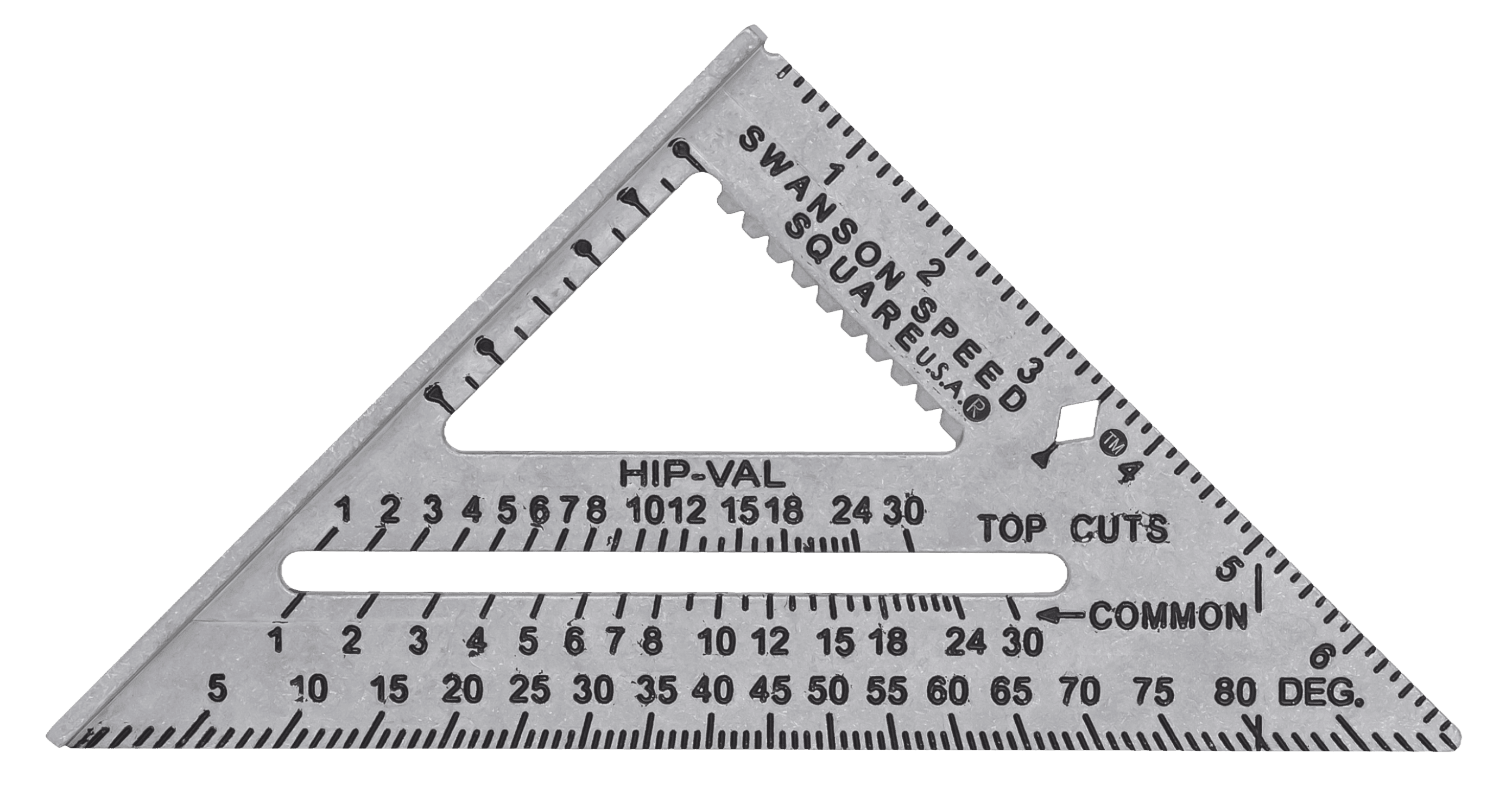
Congratulations! You Now Own the Best and Simplest Square Available
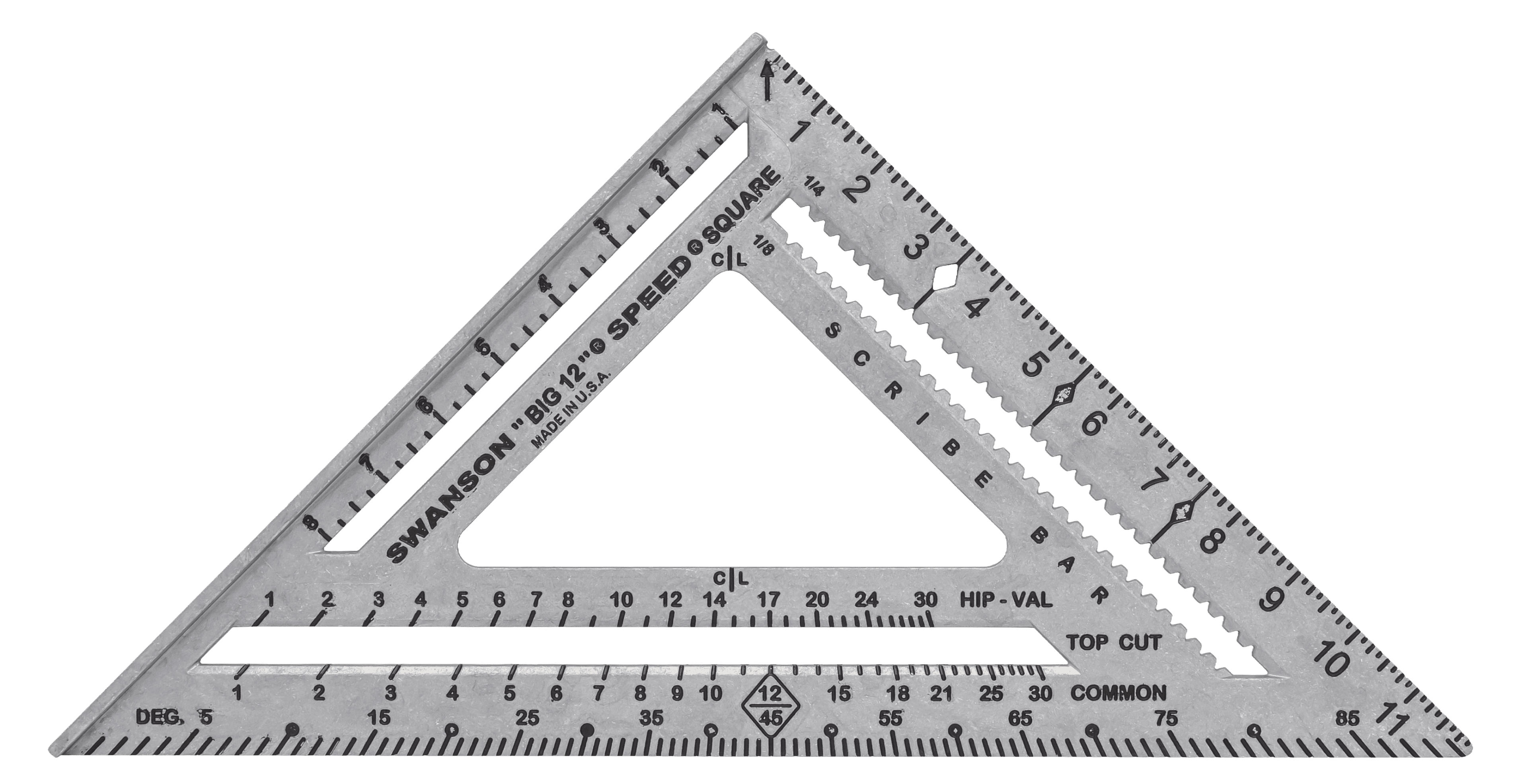
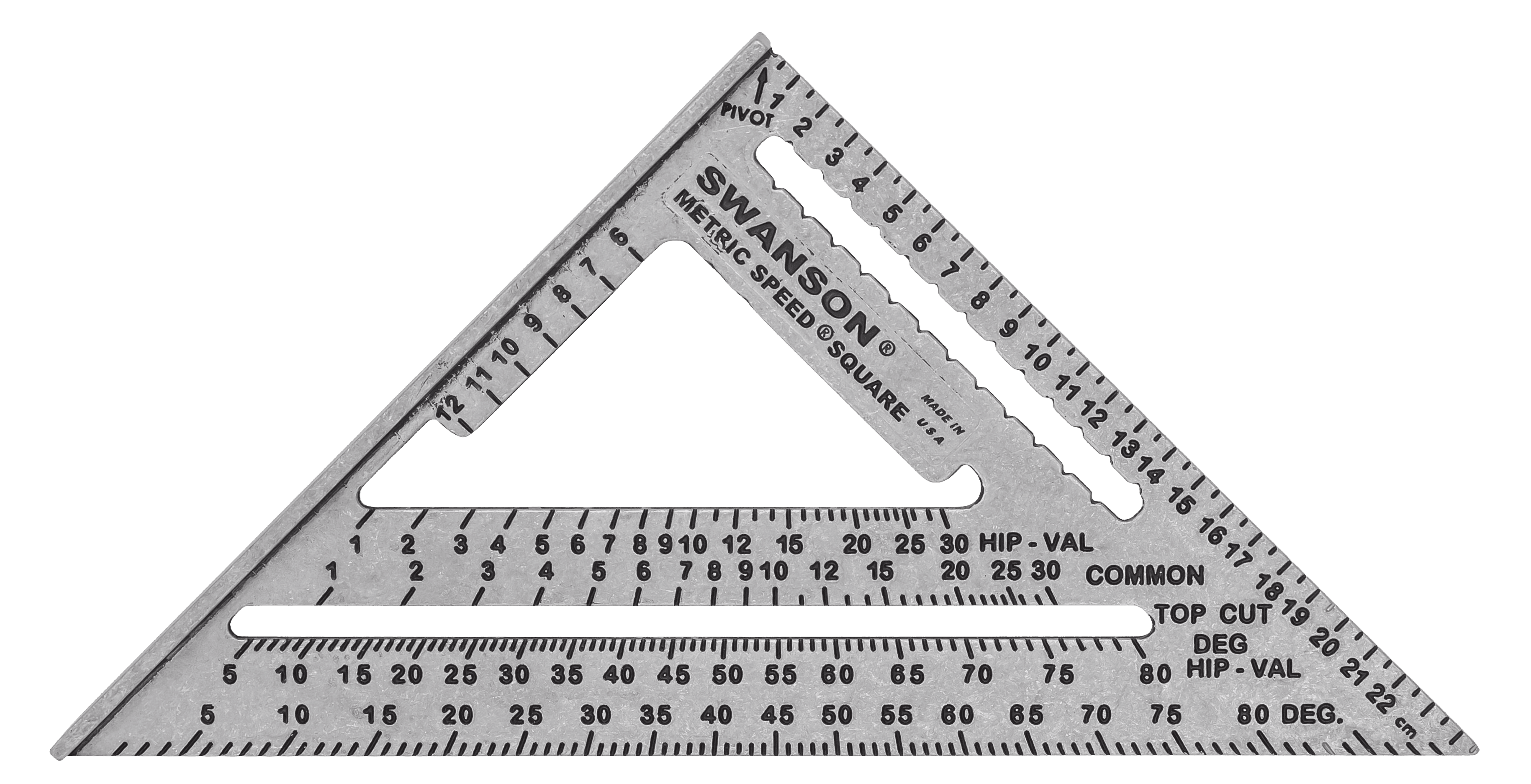
The square that started it all, and the layout method built around it. Albert Swanson folded the rafter square, the try square, the protractor, the line scriber, and the saw guide into a single triangular tool, then taught a generation of framers to lay out a roof from a single number.
Since 1925
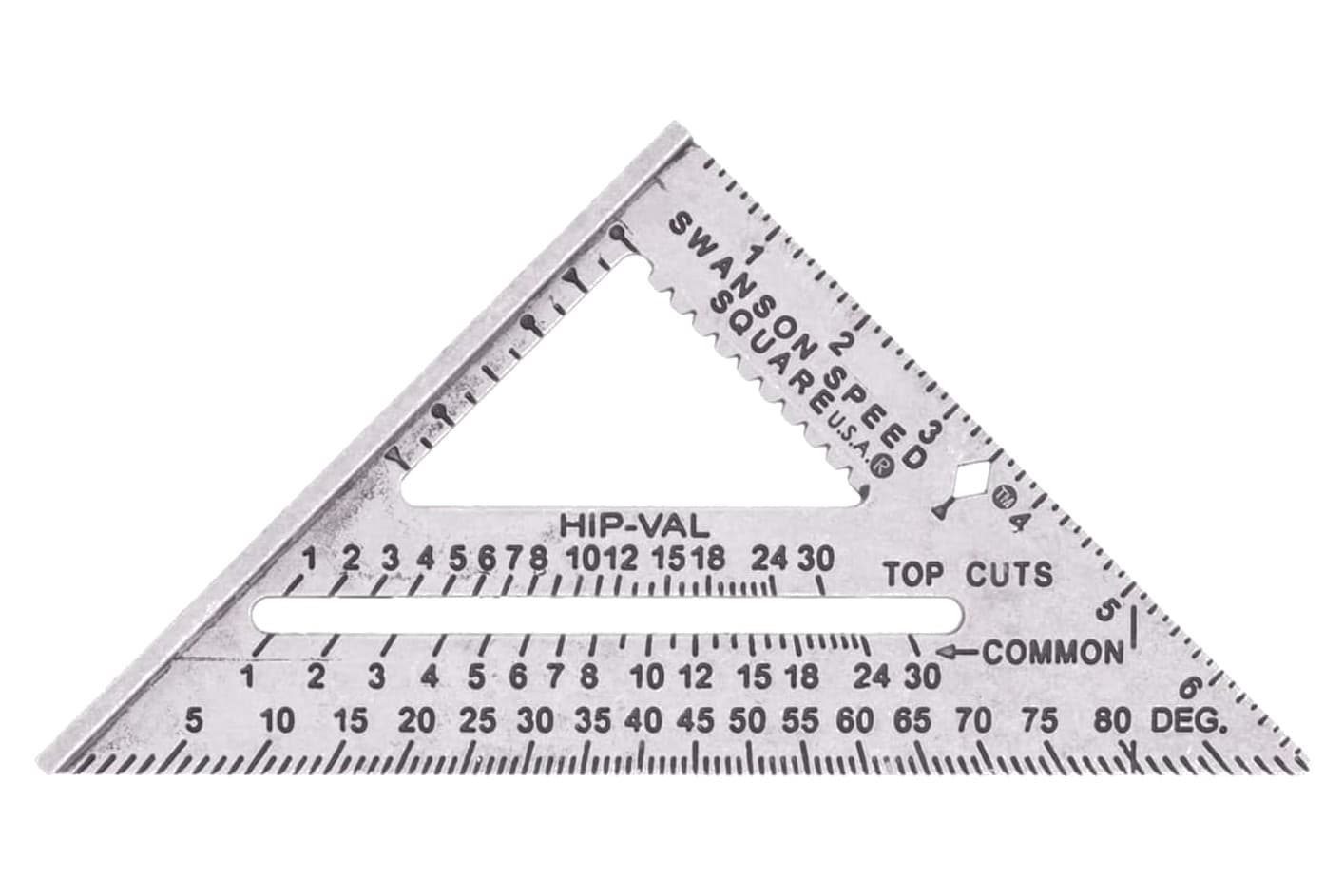
THE "ONE-NUMBER™ METHOD" HELPING WORKMEN MAKE CORRECT ANGLE CUTS FOR ANY PITCHED ROOF
The "ONE-NUMBER™ METHOD" developed by the Swanson Tool Co. Simplifies roof framing to where roofs are really framed as "easily" as your studdings or joists."
Here is a brief description of the various rafters, how to get the different cuts, where to measure from, what is meant by "run" and "rise," information about the hip and valley rafter, etc.
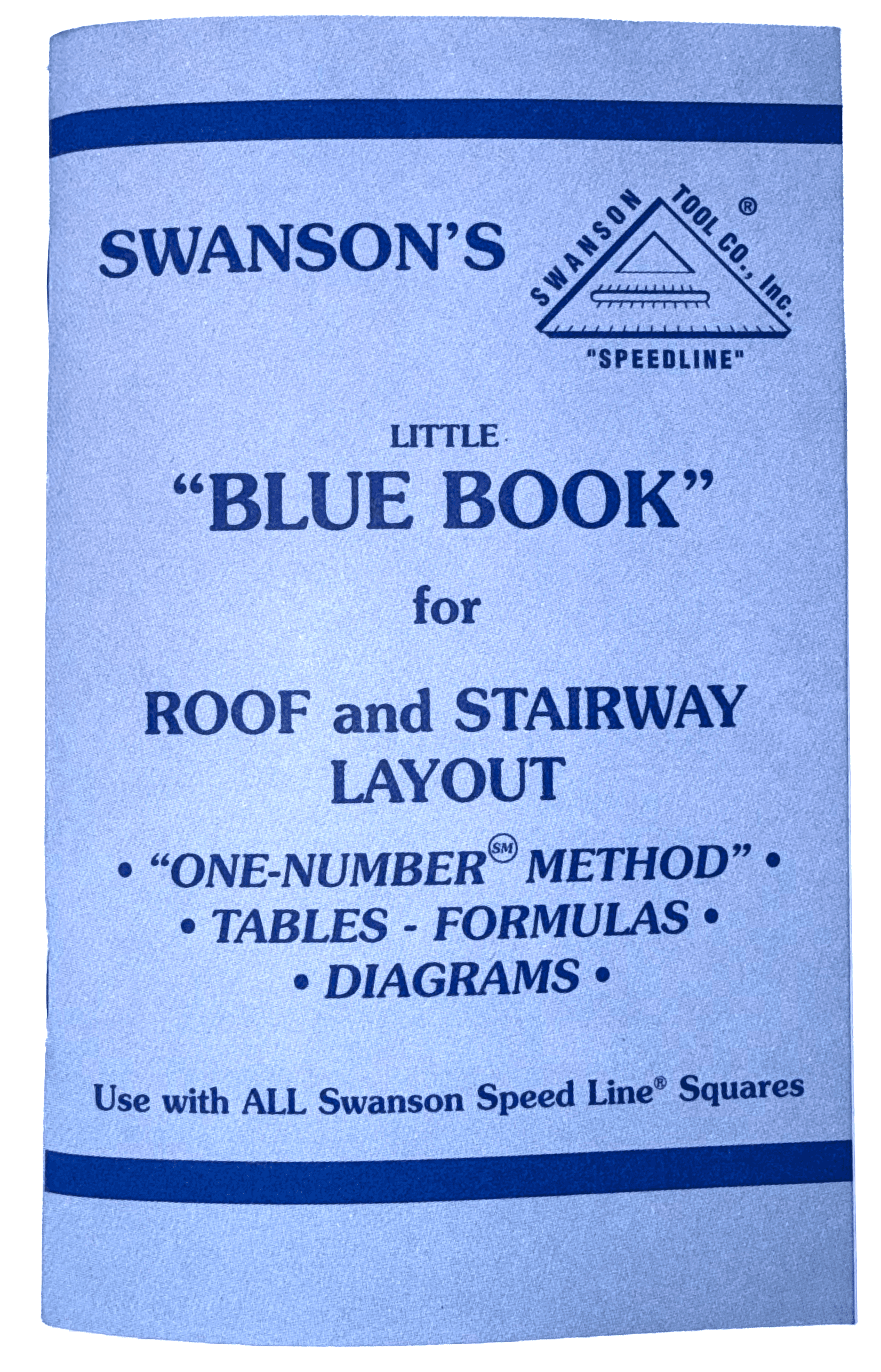
This book has been rewritten with the use of more pictures in the hope it will be of greater benefit to those who are not as familiar with roof construction as the tradesman. Good planning will save time and material.
NOW WITH FULL 90 DEGREE SCALE
The square has been redesigned with the addition of a full 90 degree scale, which will enable the user to mark any angle in degrees, as well as all the angles represented in "inch rise per foot run." You can easily convert degrees to inch rise or vice versa at a glance. The square makes an excellent guide for the electric saw to run against and is very handy for trim work.