
Chapter 4 /6 · The Original Blue Book
Cutting Jack Rafters
The short rafters that frame from the hip or valley to the wall plate. Each one a different length, all stepping by the same fixed amount per spacing.
After reading
Cut a series of jack rafters off one piece of stock, with the right length increment per 16, 18, 20, or 24 inch spacing, and the right plumb + cheek cut where the jack meets the hip.
What a jack rafter does
A jack rafter does not extend from plate to ridge. A hip jack runs from the wall plate to the hip rafter at 90 degrees to the plate. A valley jack runs from the ridge to the valley rafter. The rise and run are identical to a common rafter at the same pitch; the only difference is a 45 degree cheek cut where the jack meets the hip or valley.
How to lay them out
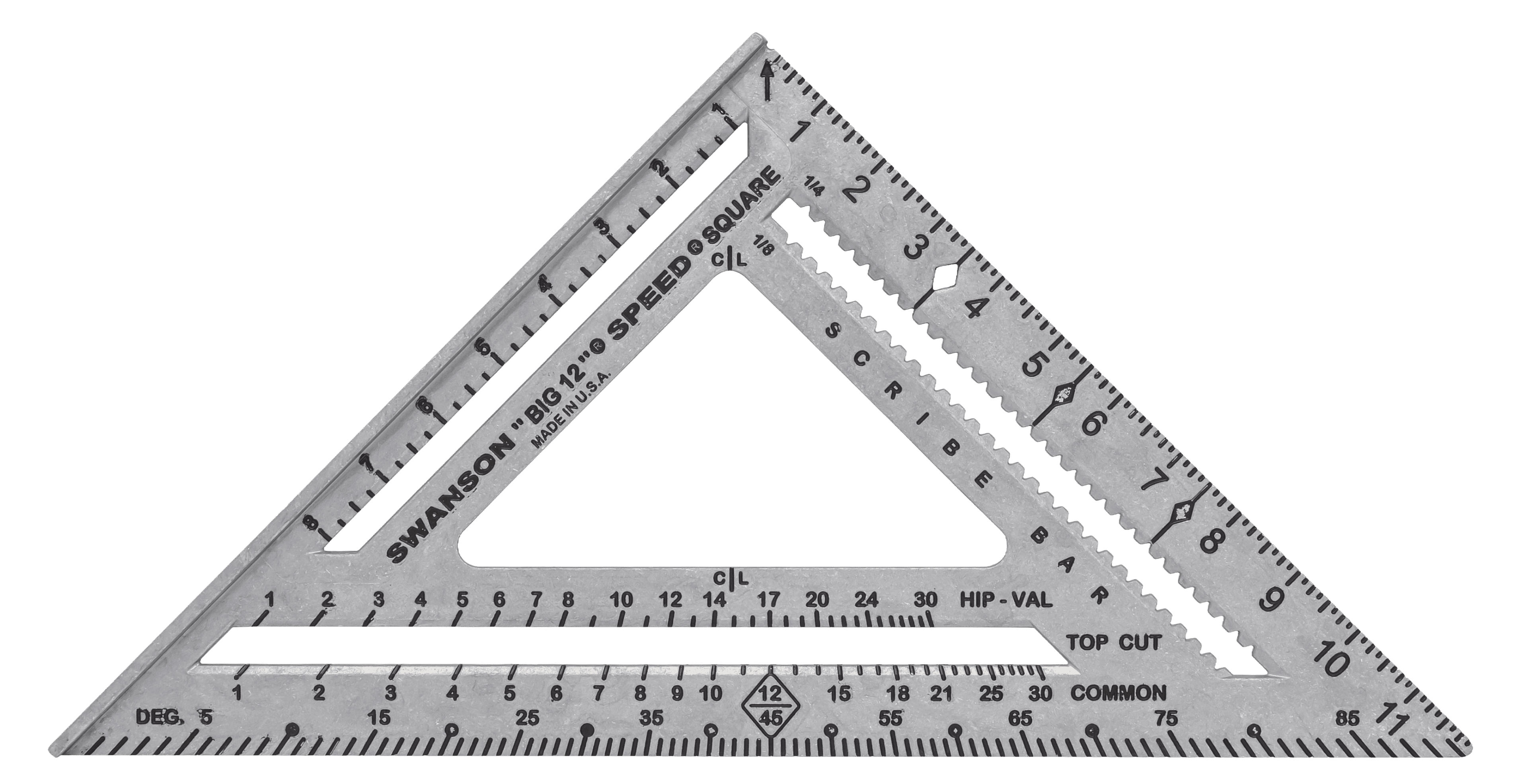
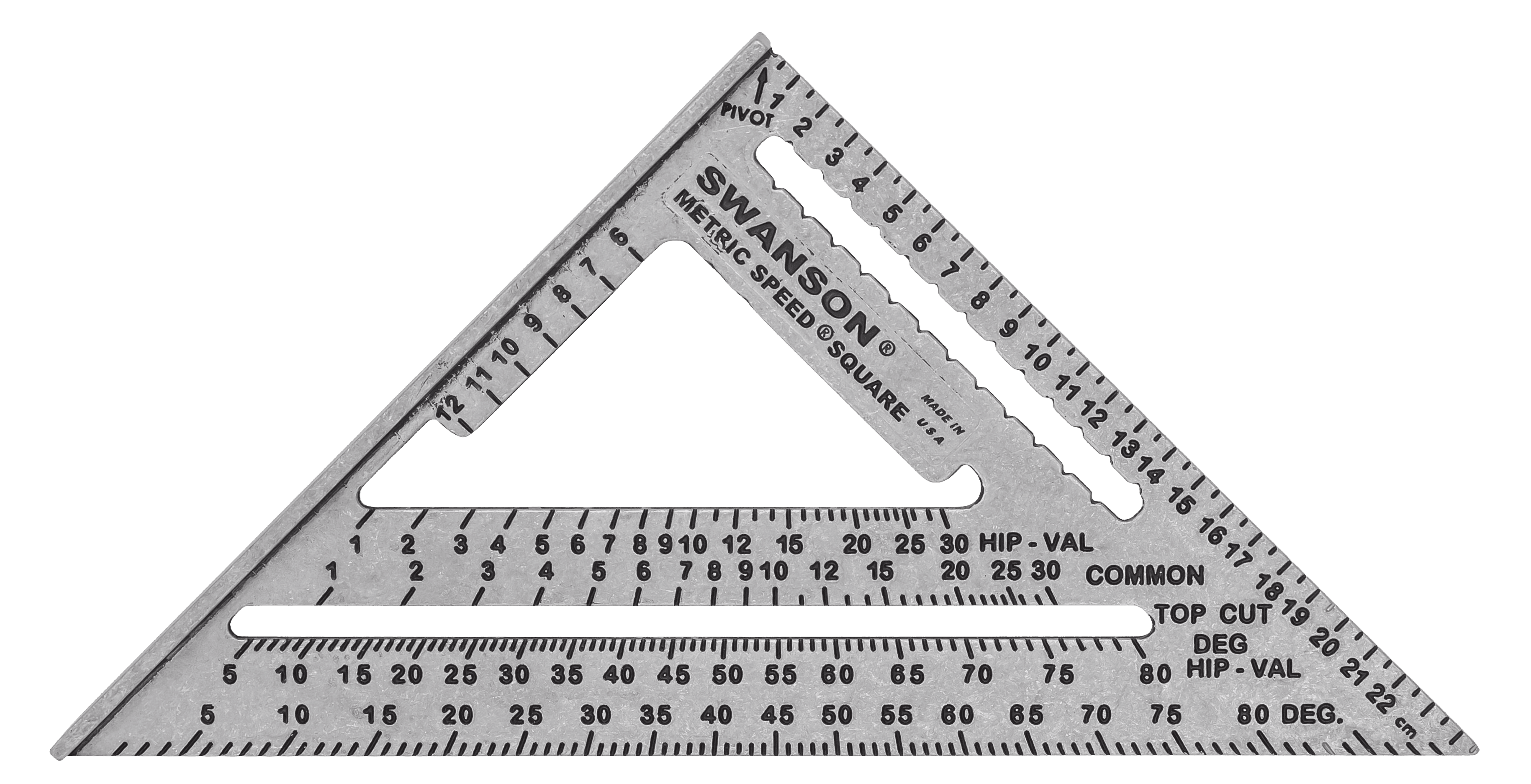
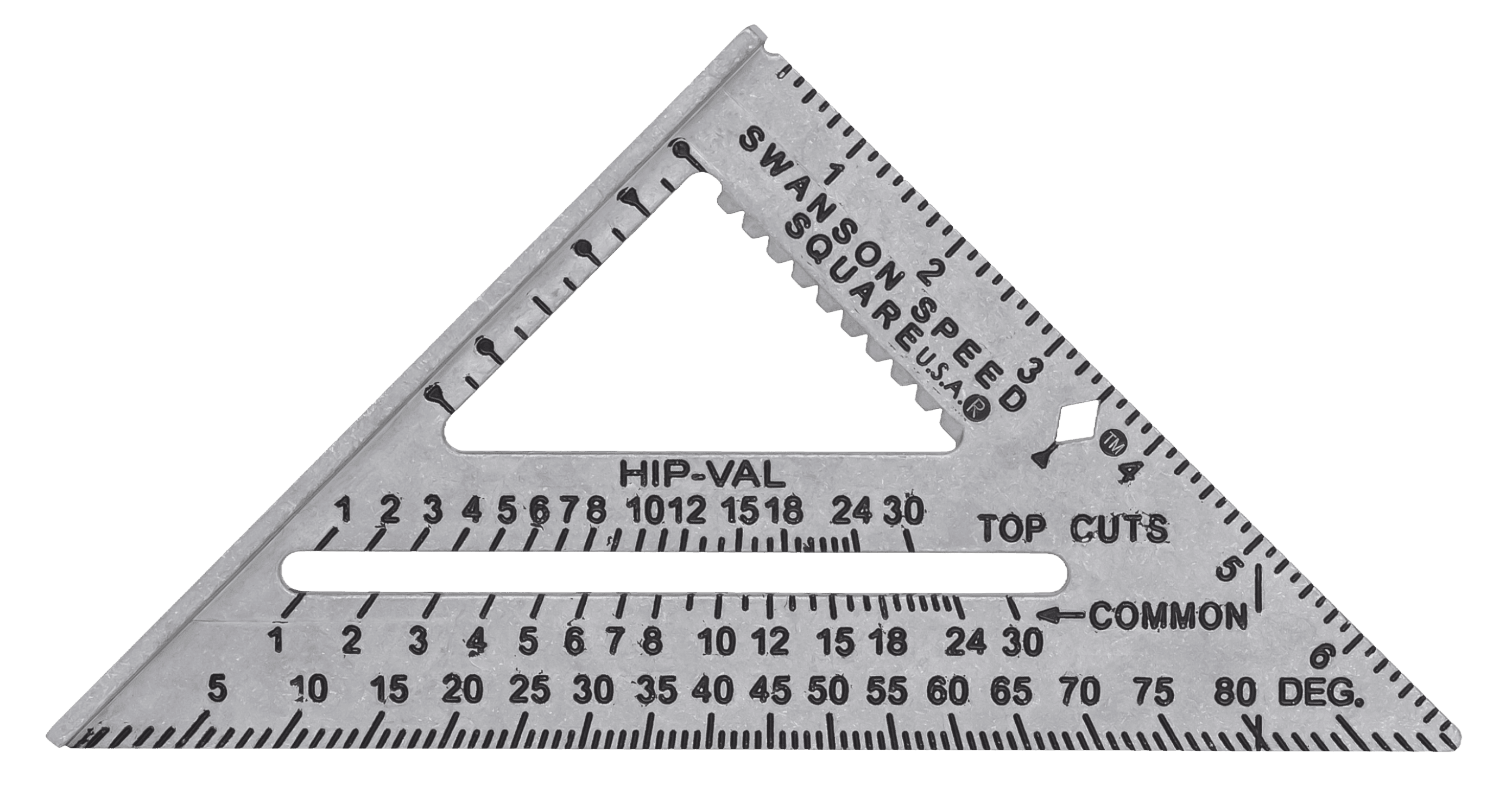
Use the same COMMON scale on the Speed® Square as you would for a common rafter. Measure the longest jack first, then step down by the spacing increment for each subsequent jack. Cut a long-and-short pair from each piece of stock to keep waste down.
JACK RAFTERS: One which does not extend from plate to ridge. Hip Jack, one running from plate to hip at 90º to plate. Valley Jack, one running from ridge to valley at 90º to ridge. Cripple Jack, one which neither touches the ridge nor plate, but runs from a hip rafter to a valley rafter at 90º to the ridge.
The rise and run of a jack rafter are the same as that of a common rafter. When marking jacks use the common rafter scale and same number (inch rise). Where rafter rests against hip or valley, mark plumb cut, then cut at 45º angle along this mark. This will give both plumb cut and side cut. When resting on ridge or plate, lay out the same as for the common rafters. For cripple jacks, mark plumb cuts on both ends and saw at 45º as above.
When measuring the length of the jack rafter, measure from longest corner (plumb cut on 45º) to other plumb cut mark, along Top Side (same for hip rafter). Cripples are measured from long point to long point diagonally along top edge. Measuring to the long point will compensate for 1/2 of the ridge thickness (or for jacks, 1/2 of valley or hip thickness). There is no problem in laying out these angles on the rafters as long as you keep in mind which side of the hip (or whatever) you want the rafter to fit against. Usually a carpenter will space the ceiling joist from an outside wall and working to a 48" center. This gives proper spacing for dry wall or panelling or whatever is used. Proper spacing of ceiling joist will aid in roof
Construction. Measure shortest jack first (usually running next to a ceiling joist), from plate to hip rafter. The difference in length of the rest of the jacks is taken from chart. Set each rafter along side ceiling joist and spike well. The ceiling joist then ties the roof together.
Figure the rafter material lengths so you can cut a long and short jack rafter from each piece. When you have cut your shortest jack, the angle of the long end will then fit on the other side of the hip. Do this all the way up the hip, always leaving the cut off end for the other side. If lumber has crown in it, put crown up on longest cut off piece.
In some cases a carpenter will build the valley on top of the main roof, not using a valley rafter. This of course would be the easiest way on any remodeling job, room addition, etc. It saves cutting into and weakening the main roof. Mark location of valley on roof boards, 45º to common raftersormer,). Set long point of bottom end of rafter even with this line ("G" of). The top cut of the rafter is the same as top cut of common. Bottom end is a horizontal cut that extends all the way across rafter. Then tilt the base of your saw to the same angle as the roof on which the bottom end of the rafter will rest. I.E., if rafter end is to fit on a roof with 6" rise, you would tilt the base of saw to an angle of 26-1/2º (6" rise) and cut along horizontal line. With saw set at this angle you willhat it fits over the pointed end of top of common rafter, because this would also be a 26-1/2º (6" rise) angle. Save the cut off ends for the other side.
The spacing table is the workhorse
The "difference in length per jack" table tells you exactly how much shorter each jack rafter gets at standard spacings (16, 18, 20, 24 inches). Find your pitch row, pick your spacing column, multiply by the number of jacks. That is the cut list.
Jack rafter spacing, three centuries deep.
Length added or subtracted per jack rafter at standard 16″, 18″, 20″, and 24″ spacings. The numbers framers reach for when the layout strips ahead of the cut list.
| Rise | 16″ spacing | 18″ spacing | 20″ spacing | 24″ spacing |
|---|---|---|---|---|
| 4.00″ | 1'- 4 6/8" | 1'- 7" | 1'- 8 1/4" | 2'- 13/8" |
| 6.00″ | 1'- 5 7/8" | 1'- 7 1/2" | 1'- 9 1/8" | 2'- 2 7/8" |
| 8.00″ | 1'- 7 1/4" | 1'- 8 1/2" | 1'- 10 3/8" | 2'- 4 7/8" |
| 10.00″ | 1'- 8 7/8" | 1'-10 1/2" | 2'- 1" | 2'- 7 1/4" |
| 12.00″ | 1'-10 5/8" | 2'- 1 1/2" | 2'- 1 1/2" | 2'-10" |
| 16.00″ | 2'- 2 5/8" | 2'- 6" | 2'- 6 1/2" | 3'- 4" |
Same numbers Albert Swanson printed in 1925.
Open the full 1925 TableThe current Little Blue Book table
Above is the cross-edition view. Below is the table as it appears in the current Little Blue Book, the edition included with select Speed® Squares today.
DIFFERENCE IN LENGTH OF JACK RAFTERS OF VAROUS SPACING
Difference in Length of Jack Rafters of Various Spacing
Rows
27
Rise
- 16"
- 1'- 4 1/16"
- 18"
- 1'- 6 1/8"
- 20"
- 1'- 8 1/8"
- 24"
- 2'- 1/8"
Rise
- 16"
- 1'- 4 1/4"
- 18"
- 1'- 6 1/4"
- 20"
- 1'- 8 1/4"
- 24"
- 2'- 3/8"
Rise
- 16"
- 1'- 4 1/2"
- 18"
- 1'- 6 1/2"
- 20"
- 1'- 8 5/4"
- 24"
- 2'- 3/4"
Rise
- 16"
- 1'- 4 7/8"
- 18"
- 1'- 7"
- 20"
- 1'- 9 1/8"
- 24"
- 2'- 1 3/8"
Rise
- 16"
- 1'- 5 3/8"
- 18"
- 1'- 7 1/2"
- 20"
- 1'- 9 5/8"
- 24"
- 2'- 2"
Rise
- 16"
- 1'- 5 7/8"
- 18"
- 1'- 8 1/8"
- 20"
- 1'-10 3/8"
- 24"
- 2'- 2 7/8"
Rise
- 16"
- 1'- 6 1/2"
- 18"
- 1'- 8 7/8"
- 20"
- 1'-11 1/8"
- 24"
- 2'- 3 7/8"
Rise
- 16"
- 1'- 7 1/4"
- 18"
- 1'- 9 5/8"
- 20"
- 2'- 0"
- 24"
- 2'- 4 7/8"
Rise
- 16"
- 1'- 8"
- 18"
- 1'-10 1/2"
- 20"
- 2'- 1"
- 24"
- 2'- 6"
Rise
- 16"
- 1'- 8 7/8"
- 18"
- 1'-11 3/8"
- 20"
- 2'- 2"
- 24"
- 2'- 7 1/4"
Rise
- 16"
- 1'- 9 3/4"
- 18"
- 2'- 3/8"
- 20"
- 2'- 3 1/8"
- 24"
- 2'- 8 5/8"
Rise
- 16"
- 1'-10 5/8"
- 18"
- 2'- 1 1/2"
- 20"
- 2'- 4 1/4"
- 24"
- 2'-10"
Rise
- 16"
- 1'-11 5/8"
- 18"
- 2'- 2 1/2"
- 20"
- 2'- 5 1/2"
- 24"
- 2'-11 3/8"
Rise
- 16"
- 2'- 1/2"
- 18"
- 2'- 3 5/8"
- 20"
- 2'- 6 3/4"
- 24"
- 3'- 7/8"
Rise
- 16"
- 2'- 1 5/8"
- 18"
- 2'- 4 3/4"
- 20"
- 2'- 8"
- 24"
- 3'- 2 3/8"
Rise
- 16"
- 2'- 2 5/8"
- 18"
- 2'- 6"
- 20"
- 2'- 9 3/8"
- 24"
- 3'- 4"
Rise
- 16"
- 2'- 3 3/4"
- 18"
- 2'- 7 1/4"
- 20"
- 2'-10 3/4"
- 24"
- 3'- 5 5/8"
Rise
- 16"
- 2'- 4 7/8"
- 18"
- 2'- 8 1/2"
- 20"
- 3'- 0"
- 24"
- 3'- 7 1/4"
Rise
- 16"
- 2'- 6"
- 18"
- 2'- 9 3/4"
- 20"
- 3'- 1 1/2"
- 24"
- 3'- 9"
Rise
- 16"
- 2'- 7 1/8"
- 18"
- 2'- 11"
- 20"
- 3'- 2 7/8"
- 24"
- 3'-10 5/8"
Rise
- 16"
- 2'- 8 1/4"
- 18"
- 3'- 1/4"
- 20"
- 3'- 4 1/4"
- 24"
- 4'- 3/8"
Rise
- 16"
- 2'- 9 3/8"
- 18"
- 3'- 1 5/8"
- 20"
- 3'- 5 3/4"
- 24"
- 4'- 2 1/8"
Rise
- 16"
- 2'- 10 5/8"
- 18"
- 3'- 3"
- 20"
- 3'- 7 1/4"
- 24"
- 4'- 3 7/8"
Rise
- 16"
- 2'- 11 3/4"
- 18"
- 3'- 4 1/4"
- 20"
- 3'- 8 3/4"
- 24"
- 4'- 5 5/8"
Rise
- 16"
- 3'- 2 1/4"
- 18"
- 3'- 7"
- 20"
- 3'- 11 7/8"
- 24"
- 4'- 9 3/8"
Rise
- 16"
- 3'- 4 1/2"
- 18"
- 3'- 9 3/4"
- 20"
- 4'- 2 3/4"
- 24"
- 5'- 7/8"
Rise
- 16"
- 3'- 7"
- 18"
- 4'- 1/2"
- 20"
- 4'- 5 7/8"
- 24"
- 5'- 4 5/8"
The original table
The Original Blue Book printed the same numbers. Different typeface, same cuts.
DIFFERENCE IN LENGTH OF JACK RAFTERS OF VARIOUS SPACING
Difference in Length of Jack Rafters of Various Spacing
Rows
27
Rise
- 16"
- 1'- 4 1/16"
- 18"
- 1'- 6 6/8"
- 20"
- 1'- 8 1/8"
- 24"
- 2'- 1/8"
Rise
- 16"
- 1'- 4 1/4"
- 18"
- 1'- 6 1/4"
- 20"
- 1'- 8 1/4"
- 24"
- 2'- 3/8"
Rise
- 16"
- 1'- 4 1/2"
- 18"
- 1'- 7"
- 20"
- 1'- 8 1/4"
- 24"
- 2'- 3/4"
Rise
- 16"
- 1'- 4 6/8"
- 18"
- 1'- 7"
- 20"
- 1'- 8 1/4"
- 24"
- 2'- 13/8"
Rise
- 16"
- 1'- 5 3/8"
- 18"
- 1'- 7 1/2"
- 20"
- 1'- 9 1/8"
- 24"
- 2'- 2"
Rise
- 16"
- 1'- 5 7/8"
- 18"
- 1'- 7 1/2"
- 20"
- 1'- 9 1/8"
- 24"
- 2'- 2 7/8"
Rise
- 16"
- 1'- 6 1/2"
- 18"
- 1'- 8 1/8"
- 20"
- 1'- 10 1/8"
- 24"
- 2'- 3 7/8"
Rise
- 16"
- 1'- 7 1/4"
- 18"
- 1'- 8 1/2"
- 20"
- 1'- 10 3/8"
- 24"
- 2'- 4 7/8"
Rise
- 16"
- 1'- 8"
- 18"
- 1'- 9 5/8"
- 20"
- 2'- 1"
- 24"
- 2'- 6"
Rise
- 16"
- 1'- 8 7/8"
- 18"
- 1'-10 1/2"
- 20"
- 2'- 1"
- 24"
- 2'- 7 1/4"
Rise
- 16"
- 1'- 9 3/4"
- 18"
- 1'-11 3/8"
- 20"
- 2'- 1 3/8"
- 24"
- 2'- 8 5/8"
Rise
- 16"
- 1'-10 5/8"
- 18"
- 2'- 1 1/2"
- 20"
- 2'- 1 1/2"
- 24"
- 2'-10"
Rise
- 16"
- 1'-11 3/8"
- 18"
- 2'- 2 1/2"
- 20"
- 2'- 2 1/2"
- 24"
- 2'-11 3/8"
Rise
- 16"
- 1'-11 5/8"
- 18"
- 2'- 3 5/8"
- 20"
- 2'- 3 3/4"
- 24"
- 3'- 7/8"
Rise
- 16"
- 2'- 1 5/8"
- 18"
- 2'- 4 3/4"
- 20"
- 2'- 4 1/2"
- 24"
- 3'- 2 3/8"
Rise
- 16"
- 2'- 2 5/8"
- 18"
- 2'- 6"
- 20"
- 2'- 6 1/2"
- 24"
- 3'- 4"
Rise
- 16"
- 2'- 3 3/4"
- 18"
- 2'- 7 1/4"
- 20"
- 2'- 7 1/4"
- 24"
- 3'- 5 5/8"
Rise
- 16"
- 2'- 4 7/8"
- 18"
- 2'- 8 1/2"
- 20"
- 3'- 0"
- 24"
- 3'- 7 1/4"
Rise
- 16"
- 2'- 6"
- 18"
- 2'- 9 3/4"
- 20"
- 3'- 1 1/2"
- 24"
- 3'- 9"
Rise
- 16"
- 2'- 7 1/8"
- 18"
- 2'-11"
- 20"
- 3'- 2 7/8"
- 24"
- 3'-10 5/8"
Rise
- 16"
- 2'- 8 1/4"
- 18"
- 3'- 1/4"
- 20"
- 3'- 4 1/4"
- 24"
- 4'- 3/8"
Rise
- 16"
- 2'- 9 3/4"
- 18"
- 3'- 1 5/8"
- 20"
- 3'- 5 3/4"
- 24"
- 4'- 2 1/8"
Rise
- 16"
- 2'-10 5/8"
- 18"
- 3'- 3"
- 20"
- 3'- 7 1/4"
- 24"
- 4'- 3 7/8"
Rise
- 16"
- 2'-11 3/4"
- 18"
- 3'- 4 1/4"
- 20"
- 3'- 8 3/4"
- 24"
- 4'- 5 5/8"
Rise
- 16"
- 3'- 2 1/4"
- 18"
- 3'- 7"
- 20"
- 3'-11 7/8"
- 24"
- 4'- 9 3/4"
Rise
- 16"
- 3'- 4 1/2"
- 18"
- 3'- 9 3/4"
- 20"
- 4'- 2 3/4"
- 24"
- 5'- 7/8"
Rise
- 16"
- 3'- 7"
- 18"
- 4'- 1/2"
- 20"
- 4'- 5 7/8"
- 24"
- 5'- 4 5/8"